Mahrang Baloch was sixteen when her father was taken. She spent the next fifteen years learning that “missing” is often a washed-down word for something else. Muhammad Anwer was a 44-year-old farmer. He was taken from a mosque near his home in Duki, mid-prayer, by men from a counter-terrorism unit. His family spent seven months not knowing where he was, or whether he was alive. In January, his body was dumped back in the same district he’d been taken from.
Nobody in Lahore heard his name. Nobody in Karachi lit a candle. In most of Pakistan, his disappearance and death happened, in every sense that matters to the news cycle, nowhere at all. That is the second tragedy of Balochistan: how little the rest of the country notices it. This did not begin last year, or even last decade. The princely state of Kalat resisted joining Pakistan after Partition and was annexed in 1948, a wound many Baloch nationalists trace their movement back to even now. Insurgencies have started and subsided in waves ever since the 1950s, again in the 1970s under a military campaign. Each wave has been brought down with more checkpoints, more cantonments, more troops, but never with a political settlement.
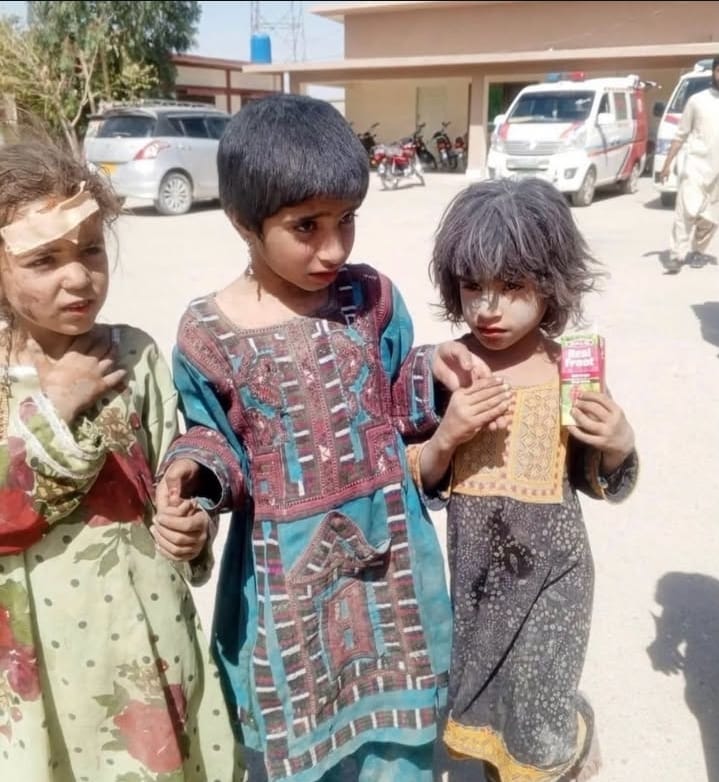
Balochistan is Pakistan’s largest province by land, sitting on natural gas and mineral wealth, yet it’s the poorest and remains the least developed. Baloch nationalists do not see that as a coincidence. Every 14th August, the flag goes up in every school courtyard from Peshawar to Hyderabad, and the nation celebrates a freedom won in 1947.But for decades, Baloch families have been marking their own dates: not days of celebration, but days of disappearance. With hundreds of graves without names, of sons and daughters who left home and never returned. Victims of these counterterrorism operations are rarely fighters. They are academics, artists, community organizers, and regular citizens whose only real qualification for suspicion is the ethnicity they happened to be born into. Some of these victims reappear months or years later, as dead bodies dumped by roadsides, long after their families had already reported them missing to unmoved authorities.
Raahi Assa was a minor who was shot dead in broad daylight in a Hoshab bazaar. Farzana Baloch was taken into custody while coming home from a hospital and later paraded in front of cameras as a “suicide bomber,” a label her family and rights groups reject. Behind every one of these names is a household missing someone at the dinner table forever. In April 2026, the UN Working Group on Enforced or Involuntary Disappearances and other UN experts urged Pakistan to address the pattern, warning that counter-terrorism measures were being used to criminalize legitimate rights advocacy, assembly, and expression.
Internet and mobile networks in Balochistan remain suspended during and after security operations, cutting the province off from the rest of the country at the exact moments its people most need to be heard. Even now, that fog hasn’t lifted. These mobile service blackouts keep local families from learning where their missing members are while simultaneously keeping the rest of the country from learning what counterterrorism operations are being held.
The attack in Surab district, Balochistan, during the second week of August 2026, is one of the latest examples of how little consensus there is nationwide about what actually happened. Pakistan’s military says a bomb being assembled by militants detonated early, killing eight of them, with a secondary blast killing three nearby civilians, followed by a clearance operation that killed ten more. Baloch Yakjehti Committee and local media describe an airstrike on Surab’s Goandhan and Gidar areas killing around 20-30 civilians, including women and children. Two accounts of the same few days, describing what sound like two different events. But a nation that only mourns its dead in Punjabi and Urdu, and only in certain postal codes, isn’t practicing unity. It’s practicing selective grief.
What is not in dispute is how the operation was marketed. ISPR held it up as a clean win, issuing statements crediting the forces involved and treating the deaths as a milestone for its own soldiers. What that framing leaves out is what daily life already looks like for the people who are neither militants nor soldiers. Checkpoints line nearly every road and every town in Balochistan, manned by men who can stop, search, or hold anyone they choose. In Balochistan, checkpoints aren’t an emergency measure and, for many residents, their real purpose isn’t safety. It’s a means to make sure no one forgets who is in charge.
What deserves more attention than it gets is that the most visible face of Baloch resistance today has nothing to do with the armed insurgency at all. For most people in Balochistan, resistance looks like a classroom, with local students and academics trying to raise their area’s literacy rate simply by attending class, finishing a degree, and trying to excel in fields Balochistan rarely gets the chance to send its own people into. Even that hasn’t been allowed. Baloch rights groups note that students make up a disproportionate share of the disappeared, as if the pursuit of an education were itself the offense. Resistance there also looks like a peaceful, women-led movement. The Baloch Yakjehti Committee has organized long marches and sit-ins, and observes an annual day of remembrance for the disappeared.
Its response from the state has been arrests, baton charges, and terrorism charges against its own organizers. A woman asking for her father’s name to be cleared should not have to fear becoming the next name on the list. None of this erases the real violence Pakistan has faced from armed groups in the province, who have killed soldiers and civilians alike, including dozens of security personnel in coordinated attacks this year. Those attacks deserve no defense, and no one honest about Balochistan pretends otherwise. But a state cannot answer violence with violence against an entire population and call it security. Collective punishment, raiding homes, only deepens the grievance that feeds one.
This Independence Day, real patriotism does not mean looking away from Balochistan. It means asking why, seventy-nine years later, a Baloch mother still cannot be sure her son will come home from the market. She can’t question why “freedom” for some parts of the country has always come with an asterisk. A nation’s founding promise is only as strong as its weakest guarantee, and today, that guarantee is thinnest in Balochistan.